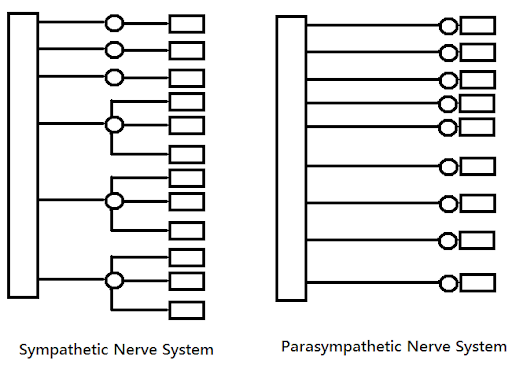
A) Mechanism :
1) Resting potential :
- Na+/K+ pump at membrane pump 3Na+ out and 2K+ in the membrane using energy

- Membrane is more permeable to K+ than Na+ at rest. The tendency of K+ diffuse out is more than Na+ diffuse in along the concentration gradient , forming inside negative and outside positive
2) Action potential :
Arrival of action potential , which higher than threshold value
↓
Membrane is more permeable to Na+
↓
Rapid influx of Na+ across the membrane, and it is even enhanced, and it is even enhanced the permeability
↓
Depolarization begin (reversal of charge), action potential begin
↓
Reversal of charge cause decrease in permeability of Na+ and increase in permeability of K+
↓
K+ ion flow out cause Repolarization
↓
K+/Na+ pump pump K+ in and Na+ out restore resting potential


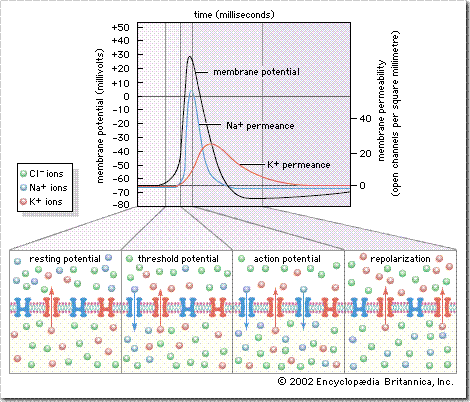
3) Transmittion between neurone :
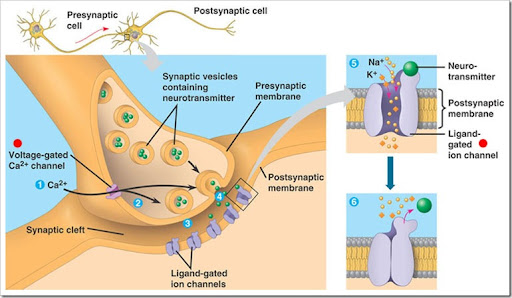
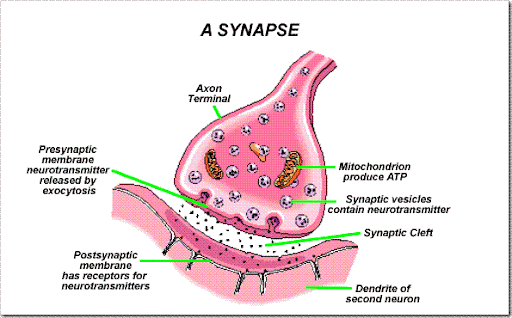
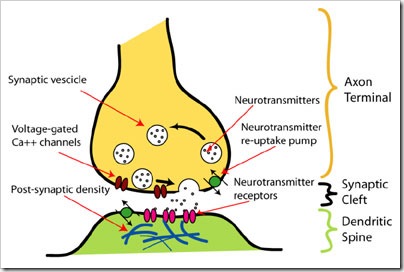
- Upon arrival of action potential, the neutrotransmitter is released in vesicle, it diffuse across the synaptic cleft for relaying information to the opposite side.
- The post-synaptic membrane possesses receptors to specifically combine with the neutrotransmitter, leading to increase of permeability of Na+, thus increase in membrane potential. As more neutrotransmitter substance arrive until sufficient depolarization occurs and exceeds the threshold value, action potential is generated.
4) Rate of Transmittion :
- Temperature
- Diameter
- Myelinated
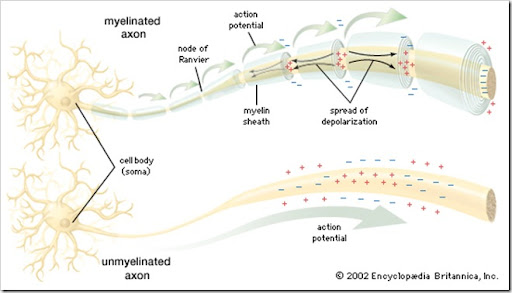
- Unmyelinated nerve transmit nerve signal as countinous spread ,which is smooth progressive movement
- In myelined nerve , the myelin sheat is resistant, the signal can only occur at node of Ranvier. Depolarization occur from one node to another node, which spread as discountinous spread.

B) Brain :
1) Spinal cord :
- Sensory neurone relay sensory impulses from limb receptor via spinal nerve to brain.
- Motor impulses and interneurons relay moter impulses from brain via spinal nerve to limb muscle.
- Reflex action
2) Medulla :
- Maintain homostatic in body
3) Cerebellum :
- Muscle tone
- Sensitivity of tendon
- Sensitivity of Organs of balance in ears
4) Cerebrum :
- Control of voluntary action (initate of action)
- Site of sensation (final station)
- Association
- Learning and memory
C) ANS :
Comparsion between Sympathetic Nervous System and Parasymthetic Nervous System :
| Sympathetic Nerve System | Parasympathetic Nerve System |
| -Close to spinal cord | -Close to effectors |
-Short preganglionic fibres,
Long postganglionic fibres | -Long preganglionic fibres,
Short postganglionic fibres |
| -Many postganglionic fibres | -Many preganglionic fibres |
| -Wide area effect | -Restricted area |
| -Widespread effect | -localized effect |
| -Excitatory homeostatic effect | -Inhibitory homeostatic effect |
| -Mobilizing energy for emergency use | -Save energy and restore to rest state |
| -Dominating during stressful | -Dominating during rest |
| -Noradrenaline | -Acetylcholine |